What is Dry Eye?
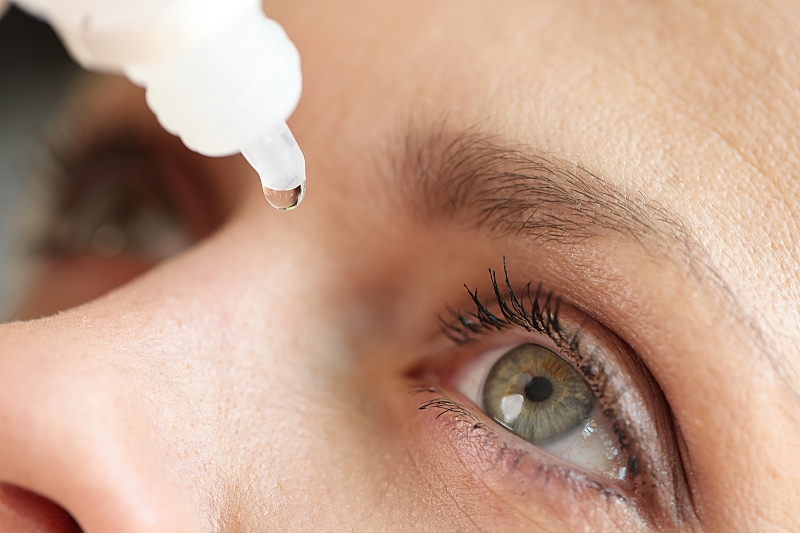
Our eyes need tears to stay healthy and comfortable. If your eyes do not make enough tears, it is called dry eye. Dry eye also happens when tears are not made of the right mix of elements (see diagram below), or when the tear film is not as it should be.
How do Tears Work?
When you blink, a film of tears spreads over the eye. This keeps the eye's surface smooth and clear. The tear film is important for good vision.
The tear film is made of three layers:
- The oily layer is the outside of the tear film. It makes the tear surface smooth and keeps tears from drying up too quickly. This layer is made in the eye's meibomian glands.
- The watery layer is the middle of the tear film. It makes up most of what we see as tears. This layer cleans the eye, washing away particles that do not belong in the eye. This layer comes from the lacrimal glands in the upper eyelid.
- The mucus layer is the inner layer of the tear film. This helps spread the watery layer over the eye's surface, keeping it moist. Without mucus, tears would not stick to the eye. Mucus is made in the goblet cells in the white of the eye and inside your eyelids.
Normally, our eyes constantly make tears to stay moist. If our eyes are irritated, or we cry, our eyes make a lot of tears. But, sometimes the eyes don't make enough tears or something affects one or more layers of the tear film. In those cases, we end up with dry eyes.
Tears keep your eyes healthy and comfortable. Dry eye is when you do not produce enough tears or the right type of tears.
What Causes Dry Eye?
People tend to make fewer tears as they get older due to hormonal changes. Both men and women can get dry eye, however, it is more common in women--especially those who have gone through menopause. Here are some other causes of dry eye:
- Certain diseases, such as rheumatoid arthritis, sjogren's syndrome, thyroid disease, and lupus.
- Blepharitis (when eyelids are swollen or red).
- Entropion (when eyelids turn in). Ectropion (when eyelids turn out).
- Being in smoke, wind or a very dry climate.
- Looking at a computer for a long time reading and other activities that reduce blinking.
- Using contact lenses for a long time.
- Having refractive eye surgery, such as LASIK
- Taking certain medicines, such as:
- Diuretics (water pills) for high blood pressure
- Beta-blockers, for heart problems or high blood pressure
- Allergy and cold medicines (antihistamines)
- Sleeping pills
- Anxiety and antidepressant medicines
What Are Symptoms of Dry Eye?
- You feel like your eyes are stinging and burning.
- You have blurry vision, especially when reading.
- There is a scratchy or gritty feeling like something is in your eye.
- There are strings of mucus in or around your eyes.
- Your eyes are red or irritated. This especially true when you are in the wind or near cigarette smoke.
- It is painful to wear contact lenses.
- You have lots of tears in your eyes. This might sound odd, but your eyes make more tears when they are irritated by dry eye.
Let us help you find a treatment option that brings you the relief you’re searching for.
Managing Dry Eye
HYGIENE
Bacteria can breed on the lid margin and between the lashes. Toxins are then released into the tear film, which induces inflammation and redness. It is important to clean the eyelids thoroughly morning and night.
HEAT THERAPY
The eyelid is lined with oil glands responsible for creating the most critical component in the tear film. However, poor diet and systemic inflammation cause the oil to thicken and the glands to become clogged. Inadequate oil levels equate to premature tear evaporation and subsequent burning and visual disturbance. Daily heat therapy can help thin the oil and increase its flow into the tear film.
NEUTRACEUTICALS
Inflammation is often the driving force of dry eye disease. It has many secondary effects such as thickening of the oil and degradation of both the oil and water glands. Nutraceutical therapy is proven to decrease inflammation systemically, which also helps to subside inflammation locally. Additionally, it can thin the oil and increase its flow into the tear film.
PUNCTAL OCCLUSION
There is a hole on the inner corner of each lid by which the tears exit. When you have low tear production a/o your tears evaporate quickly, it is helpful to slow down the drainage of the tears. This is done via a simple, painless process using dissolvable (collagen) or silicone plugs.
PHARMACEUTICALS
If long term anti-inflammatory therapy is warranted, an immunomodulator drop is prescribed twice per day. However, it may take up to three months to take full effect. If short term therapy (or additional therapy) is needed, a steroid drop will be prescribed. You will feel the benefit much quicker, but it is typically not recommended for long term use.
New Dry Eye Treatment
We are fortunate to have so many new options for treating dry eye disease in recent years. Two new technologies that we have been using are intense pulse light (IPL) and low-level light therapy (LLLT). When they are used together, the effects are synergistic and produce a better outcome.
Intense Pulse Light (IPL) with Low-Level Light (LLLT)
- Immediate results in 15 minutes
- non-invasive, painless and stress-free
- Treat ocular rosacea, meibomian gland dysfunction (MGD), and dry eye
- Targets chronic inflammation
- Enhances energy production
- Accelerates cellular activity
- Balances antioxidants
- Stimulates natural healing processes
- Increase tear break up time and Schirmer's
- Increase lipids on the ocular surface
- Long lasting results
Dry eyes are not only uncomfortable — they can also be bad for the health of your eyes. Find relief at Vision Source today.
Find a Location
Schedule an appointment at one of our Greater Orlando eye clinics.